Manara Energy is a Doha-based solar trading and energy advisory firm. We source premium solar systems directly from certified manufacturers in China and bring them to buyers across Africa and the Gulf. We also advise organisations on energy policy, sustainability, and decarbonisation strategy.
Manara Energy was founded in Doha to address a clear gap in the market: the absence of a technically informed, policy-literate intermediary between Asia's solar manufacturing ecosystem and the buyers driving Africa's energy transition. We are a young and growing firm, built on direct factory relationships in China and grounded in deep knowledge of the markets we serve.
Our name comes from the Arabic word for lighthouse. That is precisely what we intend to be: a reliable point of orientation for buyers, partners, and clients navigating a rapidly changing energy landscape. We do not overclaim our scale. We are clear about what we offer, direct about what we know, and honest about what we are building.
We currently have ongoing projects in South Africa and active supplier relationships across China's leading solar manufacturing regions. We are at the early stages of a trajectory we intend to build deliberately, with integrity at every step.
We operate from Doha and Cape Town, placing our team at the centre of both the Gulf energy market and Africa's fastest-growing solar corridor.
Our headquarters in Doha is where strategy, trade operations, and policy advisory come together. Qatar sits at the crossroads of Gulf capital markets and Asia's manufacturing supply chains, making it the natural home for a firm connecting Chinese solar production with African and GCC energy buyers. From Doha, we manage supplier relationships, coordinate shipments, and serve clients across the Gulf Cooperation Council.
Our Cape Town presence puts us directly inside Africa's largest and most sophisticated solar market. South Africa is the continent's leading solar importer and the entry point for our broader Sub-Saharan African strategy. From Cape Town, we work with distributors, EPC contractors, and commercial and industrial clients, and coordinate ongoing projects across the country. This office is where our Africa relationships are built and maintained on the ground.
Solar trading, procurement facilitation, and energy consultancy. Each line is distinct. Together they form a coherent offer for buyers, developers, and institutions navigating the energy transition.
We source solar PV modules, battery storage systems, and complete solar installations directly from certified manufacturers in China. Our buyers get access to factory-level pricing without the complexity of managing a Chinese supply chain themselves. We handle supplier qualification, price negotiation, quality inspection, and logistics from factory to port.
For buyers who want to import directly but lack the supply chain infrastructure to do so safely, we act as the informed intermediary. We manage the full trade cycle: supplier vetting, order placement, third-party inspection, freight forwarding, customs documentation, and delivery coordination. The buyer focuses on installation. We manage the rest.
Our advisory practice serves governments, corporations, and development institutions on energy policy, decarbonisation strategy, and ESG governance. This is not a generic consulting offer. It is grounded in genuine policy research experience and technical energy knowledge. We work where the intersection of policy and market is most consequential.
Every product we offer is sourced from certified manufacturers with full documentation, inspection records, and performance warranties. We do not trade products we have not qualified.
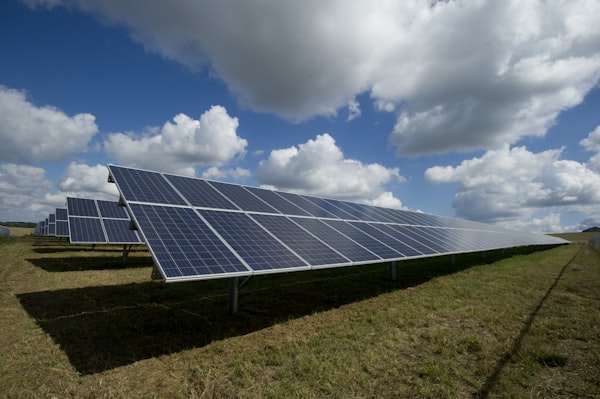
Photovoltaic solar panels are the foundation of every solar installation. We supply monocrystalline panels using the latest cell technologies, sourced from leading Chinese manufacturers who have dedicated Africa and GCC sales teams and proven export track records. All panels are IEC certified and accompanied by full technical documentation for customs clearance and installation permits.
TOPCon (Tunnel Oxide Passivated Contact) is the current leading technology in mass-produced solar modules. It delivers the highest conversion efficiency available at commercial scale, meaning more power from the same surface area. This matters for rooftop buyers where space is constrained and for utility-scale developers optimising land use. We source TOPCon panels from JinkoSolar, Trina Solar, and Risen Energy.
PERC (Passivated Emitter and Rear Cell) technology remains the most widely deployed solar panel type globally. It offers a proven combination of efficiency, reliability, and competitive pricing. For buyers focused on cost per watt rather than maximum efficiency per square metre, PERC monocrystalline panels represent the most commercially rational choice for large-volume orders across the African market.
Bifacial panels generate electricity from both the front and rear surfaces, capturing reflected light from the ground below. In high-irradiance environments such as Qatar, the GCC, and large parts of Sub-Saharan Africa, bifacial panels deliver meaningful additional yield compared to standard monofacial designs. They are particularly well-suited to ground-mounted utility-scale and commercial-scale installations with light-coloured ground surfaces.
The inverter converts DC power from solar panels into the AC power that buildings and grids actually use. It is the intelligence layer of any solar system. We supply string inverters for large commercial and utility applications, and hybrid inverters for systems requiring battery storage integration. Our primary brands are Sungrow and Growatt, both of which have strong service networks across the African markets we serve.
Hybrid inverters manage solar generation, battery storage, grid connection, and backup power in a single unit. They are the standard choice for residential and commercial buyers who want energy independence without full off-grid complexity. When the grid fails, a hybrid inverter switches automatically to battery power, keeping critical loads running. This is the most in-demand inverter type across South Africa, Nigeria, and Kenya, driven by grid instability and the falling cost of battery storage.
String inverters are the standard solution for large commercial and utility-scale solar systems. They handle higher DC input voltage from multiple panels wired in series and convert the combined output to grid-frequency AC. They are reliable, well-understood, and cost-effective at scale. For EPC contractors and project developers handling installations above 50 kW, string inverters from Sungrow and Huawei represent the most commercially proven choice currently available in the African market.
Off-grid inverters operate entirely independently of the utility grid. They manage solar input, battery charge and discharge, and AC output without any grid connection. They are the appropriate solution for remote sites, rural electrification projects, telecommunications towers, mining operations, and any application where grid extension is uneconomic. Demand for off-grid inverters is growing across Zambia, Tanzania, Nigeria, and the rural segments of every Sub-Saharan African market we serve.
Battery storage has become the defining product in African solar markets. The falling cost of lithium storage now makes solar-plus-battery systems competitive with diesel generation across most of Sub-Saharan Africa. For South African homes and businesses facing load-shedding, and for Nigerian businesses replacing diesel generators, the economics are now decisive. We supply residential, commercial, and industrial scale systems with full battery management systems and remote monitoring.
Residential lithium-ion battery systems store solar energy generated during the day for use at night or during grid outages. They connect directly to a hybrid inverter and are managed automatically, requiring no intervention from the homeowner. The technology is now sufficiently mature that installation, commissioning, and remote monitoring can all be handled without specialist on-site expertise beyond standard electrical competency. These systems are our highest-volume product in South Africa.
Commercial and industrial battery systems operate at a scale appropriate for factories, office buildings, shopping centres, hospitals, data centres, and large retail operations. They provide backup power during outages, reduce peak demand charges from the utility, and store cheap solar energy for use during expensive peak grid periods. At this scale, the financial case is typically straightforward. We supply containerised and rack-mounted systems depending on the application requirements.
At the utility scale, battery storage enables solar-generated electricity to be dispatched on demand rather than only when the sun is shining. For mini-grid developers in rural Sub-Saharan Africa, combining solar generation with battery storage is the only financially viable path to reliable electricity for communities beyond the reach of the national grid. We supply these systems in partnership with specialist integration teams and provide full procurement and logistics support for project developers.
Not every project fits a standard product. Agricultural solar, floating solar on water reservoirs, solar carports, cold-chain refrigeration systems, solar water pumping, and integrated power-plus-storage packages for specific industrial applications all require tailored specifications. Our team works with buyers to define the right system architecture and then sources and coordinates delivery of the exact components required.
For buyers who prefer a single supply source, we configure and supply complete packaged systems covering panels, inverter, battery, mounting structure, cabling, monitoring hardware, and all balance of system components. Each package is pre-matched for electrical compatibility and supplied with full consolidated documentation. This is particularly suited to first-time solar importers in Nigeria, Kenya, Zambia, and Tanzania who want a complete, ready-to-install solution.
Solar water pumping eliminates the operating cost of diesel pumps across agricultural, livestock, and rural water supply applications. We supply DC and AC solar pumping systems sized for boreholes, surface water, and irrigation, matched to the specific head and flow requirements of each site. These systems require no battery storage in most applications: they pump when the sun shines and store water in tanks for use at any time. Demand is strong across Zambia, Zimbabwe, and the agricultural belts of East Africa.
We accept enquiries for projects that fall outside standard categories. Floating solar, solar carports, cold-chain solar refrigeration, telecom tower off-grid power, and hybrid diesel-solar-battery systems for mining or industrial applications are all within scope. For these projects, we work through a structured scoping process: define the load profile, assess the site, specify the system, and then identify and qualify the most appropriate manufacturers for each component. Contact us to begin that conversation.
Behind every product we sell, there is a team. Our technical and advisory team operates remotely and is available to any buyer or prospective client, regardless of location, at no charge. This is not a sales service. It is a genuine consultancy function staffed by people with hands-on experience in solar system design, product selection, and African market installation requirements.
Whether you are a first-time solar importer trying to understand the difference between TOPCon and PERC, a C&I developer sizing a system for a specific load profile, or a government buyer evaluating procurement specifications, our team will engage with your question directly and give you an honest answer.
Our consultancy practice is a separate and experienced division. It serves governments, corporations, and development institutions with research-grade advisory on energy policy, decarbonisation, and sustainability governance. This is distinct from our free client consultancy. It is a professional advisory engagement with a defined scope, deliverables, and fee structure.
We provide regulatory mapping, policy design support, and renewable energy strategy development for national and sub-national governments and development institutions. Our work is grounded in genuine policy research experience and is aligned with international frameworks including SDG 7, Paris Agreement Article 6, and Qatar National Vision 2030. We translate complex governance frameworks into practical, implementable instruments suited to the political economy realities of GCC and MENA contexts.
We deliver Scope 1, 2, and 3 emissions assessments, carbon footprint gap analysis, Net Zero roadmap development, and ESG reporting frameworks aligned with GRI, ISSB, and CSRD standards. We serve corporate clients across the GCC and MENA region preparing for mandatory ESG disclosure, investor scrutiny, and alignment with Qatar's nationally determined contributions and its target of a meaningful reduction in greenhouse gas emissions by 2030. Our work is evidence-based and technically grounded.
We develop integrated sustainability strategies, support science-based target setting, assess climate-related financial risk, and provide green finance advisory. We help organisations align commercial strategy with environmental commitments in a way that is credible, measurable, and suited to the specific regulatory and market context in which they operate. Our team has direct experience working with sustainability and policy institutions in Qatar and the wider GCC region.
Our current focus spans three corridors. Each is selected for structural demand, policy momentum, and alignment with our existing supplier and buyer relationships.
Qatar's National Renewable Energy Strategy targets a significant increase in solar capacity by 2030. The commercial and industrial rooftop segment is the fastest-growing entry point for private sector procurement. We serve EPC contractors, project developers, and institutional procurement divisions seeking competitive module pricing and policy intelligence aligned with Qatar National Vision 2030.
Africa's largest and most sophisticated solar market. Grid instability has driven explosive demand across residential, commercial, and industrial segments. We have ongoing projects in South Africa and a regional office in Cape Town. We supply distributors, EPC contractors, and solar installation companies across Johannesburg, Cape Town, and Durban with direct-from-factory pricing and full procurement support.
Nigeria, Kenya, Zambia, Ghana, and Tanzania represent the next structural wave of solar adoption on the continent. Solar imports across the region surged significantly in 2025. These markets are characterised by diesel displacement economics, off-grid demand, and buyers seeking reliable supply chains rather than lowest-possible spot pricing. We are actively building distribution partnerships across these markets.
Mohammed AlAgha founded Manara Energy to address something he observed directly through research and policy work in the GCC: the energy transition in Africa and the Gulf is not primarily a technology problem. The technology exists, the economics are increasingly compelling, and the demand is structural and growing. What is missing is a trusted, technically informed intermediary who can connect supply with demand efficiently and advise buyers and institutions with genuine expertise.
He holds a Bachelor of Engineering in Renewable Energy Engineering and a Master of Science in Public Policy from the Doha Institute, where his research focused on decarbonisation through regional energy integration in the GCC. His professional experience spans renewable energy research, policy advisory, and energy consultancy across the Gulf and MENA region.
Manara Energy is an early-stage company. We say that clearly. What we bring to this stage is not scale but expertise, relationships, and a genuine commitment to building something durable. We welcome enquiries from buyers, partners, and institutions who share that orientation.
mohamadwafiqagha@gmail.comWhether you are a solar distributor seeking competitive pricing, an EPC contractor requiring product sourcing, a government body seeking energy policy advisory, or a buyer who simply wants to understand the options available to them, we will respond directly and without obligation. Our team replies within two business days.